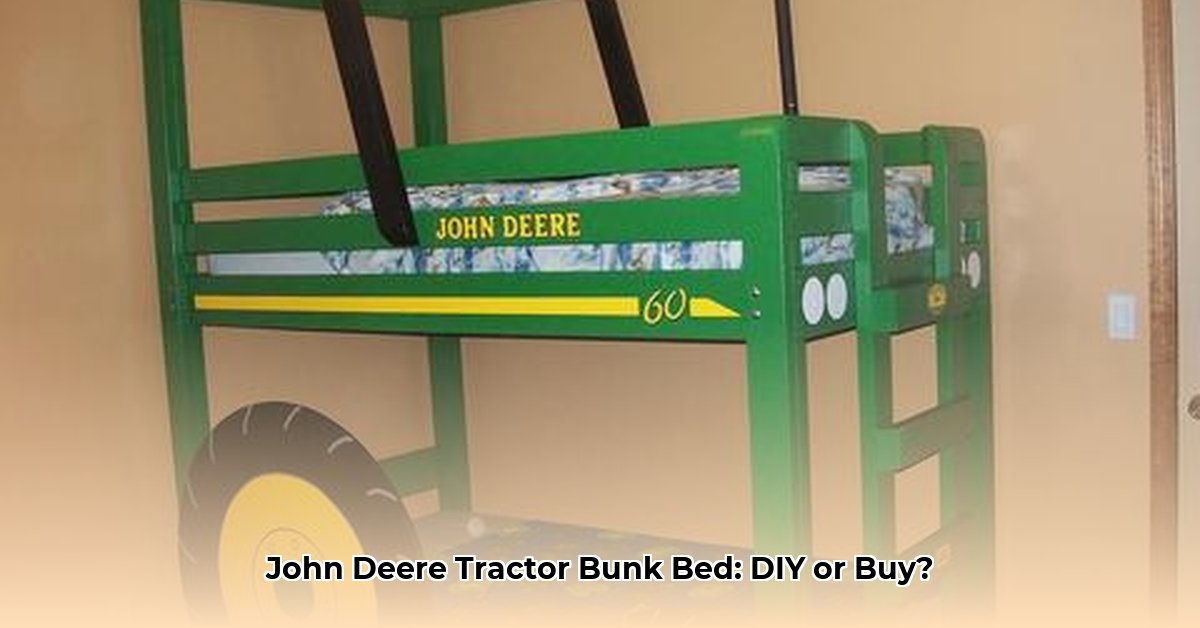
Building a John Deere tractor bunk bed is a fantastic way to create a fun and unique sleeping space for your child. But the question remains: DIY or buy? This comprehensive guide will help you weigh your options, considering cost, time, skill level, and safety. We'll explore design considerations, provide simplified DIY guidance, and highlight crucial safety aspects. For more John Deere themed ideas, check out this awesome resource.
DIY vs. Purchase: A Detailed Comparison
Choosing between building your own John Deere tractor bunk bed or buying a pre-made one is a significant decision. Both options offer distinct advantages and disadvantages. Let's analyze them to help you arrive at the best choice for your family.
DIY Advantages:
- Unmatched Customization: Create a completely unique design perfectly tailored to your child’s preferences and your home’s aesthetic.
- Potential Cost Savings: Building it yourself could be significantly cheaper than purchasing a pre-made bunk bed, especially if you already own necessary tools and materials.
- Sense of Accomplishment: The pride and satisfaction of creating something special for your child are invaluable.
DIY Disadvantages:
- Significant Time Investment: This isn't a weekend project; expect a considerable time commitment.
- Woodworking Skill Requirement: Sufficient woodworking knowledge and experience are essential. Lacking these skills significantly increases the difficulty.
- Tool Investment: You may need to acquire or rent specialized tools.
- Safety Concerns: Careful planning and precise execution are crucial to ensure the bunk bed meets safety standards.
Purchase Advantages:
- Convenience: Purchase, delivery, and assembly (often) are straightforward and hassle-free.
- Warranty & Support: Reputable manufacturers offer warranties and customer support.
- Built-in Safety Features: Pre-made beds generally adhere to safety standards, reducing your concern.
- Wide Variety of Designs: Offers a diverse selection of styles and designs to choose from.
Purchase Disadvantages:
- Higher Cost: Pre-made bunk beds are typically more expensive than DIY options.
- Limited Customization: Design options are usually restricted to existing models.
- Potential Delivery Problems: Shipping large furniture items can sometimes present challenges.
Design Considerations: Creating the Perfect John Deere Tractor Bunk Bed
Regardless of whether you choose DIY or purchase, several key design elements will influence the final product's safety and aesthetics.
- Size and Dimensions: Measure your child's room and the available space carefully. Choose bed dimensions that ensure comfortable sleeping, safe movement, and sufficient headroom for the upper bunk. Don't forget to factor in ample space around the bed for easy access.
- Safety Features: Safety is paramount! Guardrails on both the upper and lower bunks (if applicable) are essential to prevent falls. Select sturdy materials, using durable, high-quality wood and strong fasteners to ensure bed stability.
- Aesthetics: Incorporate the John Deere tractor theme effectively. Consider using green and yellow paint schemes, adding tractor wheel details, or creating a tractor-shaped headboard.
- Storage: Maximize space by incorporating storage solutions such as drawers, shelves, or cubbies to keep the area organized.
Simplified DIY Guide: Building Your John Deere Tractor Bunk Bed
While detailed plans are necessary for a successful build, these simplified steps provide a conceptual overview. Remember to consult reliable sources like Ana White for comprehensive instructions and detailed plans.
Step 1: Planning and Design: Create detailed blueprints, considering the overall dimensions, material requirements, and specific design features.
Step 2: Material Gathering: Purchase durable, child-safe wood and necessary hardware. Pre-cut lumber simplifies the process.
Step 3: Frame Construction: Construct the bed frame according to your plans, ensuring secure joints and robust construction.
Step 4: Tractor Details: Add the John Deere-themed elements; ensure they don't compromise the bed's structural integrity.
Step 5: Finishing Touches: Thoroughly sand all surfaces, apply a child-safe finish (paint or stain), and perform a final safety check.
Safety First: Child Safety Regulations and Best Practices
Prioritize safety throughout the process! Thoroughly research and adhere to all relevant safety standards for children's furniture. Ensure guardrails meet specific height requirements, the construction is sturdy, and materials are non-toxic. Never compromise on safety.
Choosing the Right Path: DIY or Purchase?
Ultimately, the best approach depends on your individual circumstances. Consider your available time, woodworking skills, budget, and desired level of customization. Whichever route you choose, prioritize the creation of a safe, enjoyable, and aesthetically pleasing bunk bed for your child.